
Ask most owners how their business is doing and they’ll quote a profit figure. It’s the wrong number to lead with. Profit tells you whether your business model works on paper; cash tells you whether it survives the month. The two are not the same, and confusing them is one of the most expensive mistakes an owner can make.
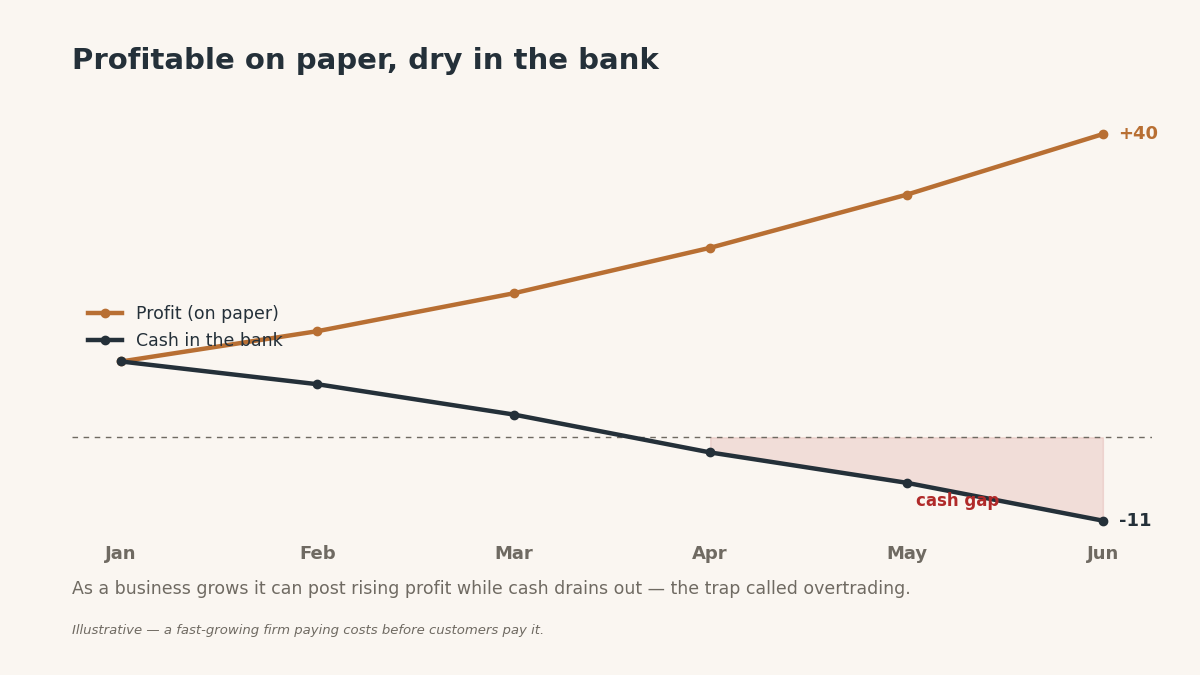
Profit is an accounting opinion. It’s counted the moment you invoice — not when the money lands — and it’s figured before you’ve collected what customers owe. Cash is a fact: it’s what’s actually in the bank to pay wages, suppliers and tax. A business can be profitable on every report and still fail, because profit sitting in unpaid invoices doesn’t pay anyone.
This is why growing businesses are so often caught out. Growth consumes cash — you buy stock, do the work and pay staff long before customers pay you. On paper you’re winning; in the bank you’re draining. It even has a name: overtrading, and it kills profitable businesses that simply ran out of cash before the profit turned up. The research bears it out — close to 30% of failed businesses run out of money, and cash-flow problems are implicated in the large majority of closures.
None of this means profit doesn’t matter. A business that isn’t profitable is dying slowly; one that runs out of cash dies suddenly. You need both — but you manage them differently: profit you review monthly, cash you watch weekly.
The trade-off is that a relentless focus on cash can make you overly cautious — turning down good growth because it’s cash-hungry, or hoarding reserves that could be working. The skill is holding both in view: chase profit, but never so hard that you run dry reaching it.